What is neurovascular surgery?
An aneurysm is a weak spot in the wall of a brain artery that bulges out like a small balloon. If it bursts, it causes bleeding around the brain, called subarachnoid haemorrhage. This usually causes a sudden, very severe headache and is a medical emergency.
Read moreShow less
In aneurysm clipping, the surgeon opens a small window in the skull (craniotomy) and uses an operating microscope to place a tiny metal clip across the neck of the aneurysm. This seals it off from the blood flow while keeping the main artery open.
Neurovascular surgery also includes removal of an AVM (arteriovenous malformation, an abnormal tangle of blood vessels), removal of a cavernoma (a small cluster of abnormal vessels), and surgery to remove blood clots after a brain haemorrhage (bleeding in the brain). Some aneurysms are instead treated by endovascular coiling, where an interventional team passes a thin tube through a blood vessel in the groin or wrist and fills the aneurysm with soft coils. The choice depends on the case.
Who may need it
Surgery is one option, not the only one. It is decided after an examination and a careful look at your scans, and non-surgical treatment is discussed first where it is suitable.
How it is done
- 1
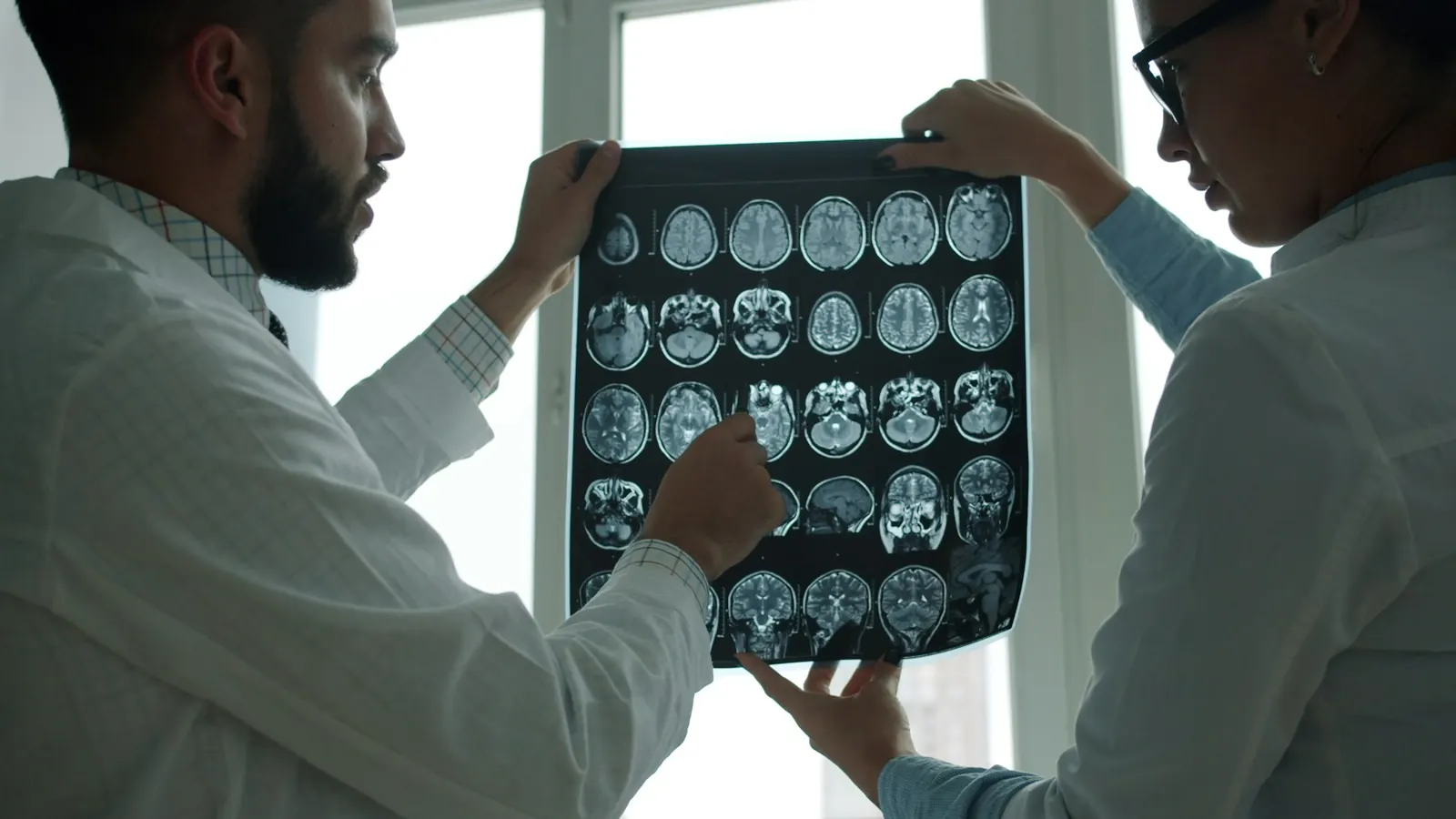
Special scans of the brain blood vessels are done first, such as CT angiography or DSA (digital subtraction angiography, a dye test of the blood vessels).
- 2
The neurosurgeon and, where available, the interventional team review the scans to decide between clipping, coiling or watching.
- 3
For clipping, you are given general anaesthesia and are fully asleep. A small window is opened in the skull.
- 4
Using the operating microscope, the surgeon gently separates the brain to reach the aneurysm and places a small titanium clip across its neck.
- 5
The bone is put back and the skin is closed. A scan may be repeated to confirm the aneurysm is sealed.
- 6
You are watched closely in the ICU (intensive care unit). After a burst aneurysm, the ICU stay is often longer.
Possible risks
Every operation carries some risk. Your surgeon will explain which of these apply to you.
Preparing for surgery
Recovery
After clipping of an unburst aneurysm, the hospital stay is often about 4 to 7 days, and many people return to normal activities over a few weeks. Headache and tiredness are common at first.
Read moreShow less
After a burst aneurysm, recovery is slower. Patients often need about two weeks or more in hospital, much of it in the ICU, because of the risk of vasospasm. Some people need physiotherapy and help with memory, mood or speech for weeks or months.
Control blood pressure, do not smoke, and keep all follow-up visits. A repeat scan of the blood vessels is usually advised at intervals. Family members of some patients may be advised screening scans.
Questions patients ask
Is clipping better than coiling?
Neither is better for every aneurysm. Coiling avoids opening the skull and suits many aneurysms. Clipping may be preferred for some shapes and positions, or when a large blood clot needs removal at the same time. The choice depends on the aneurysm, your age and health, and the team's assessment.
Does every aneurysm need treatment?
No. Many small aneurysms that have not burst are watched with regular scans, along with blood pressure control and stopping smoking. A burst aneurysm, however, usually needs urgent treatment.
What are the warning signs of a burst aneurysm?
A sudden, very severe headache, often described as the worst headache of one's life, with vomiting, neck stiffness, fainting or fits. This is an emergency. Call 108 or 112 and go to the nearest hospital with emergency care.
Will the clip stay in my head forever?
Yes. The clip is made of a material that is designed to stay in the body for life. Tell doctors about it before any MRI scan, and keep your operation details with you.
How long is the recovery?
After a planned operation, many people recover over a few weeks. After a burst aneurysm, recovery often takes months and depends on how severe the bleed was.
Disclaimer: This information is for general awareness and is not a substitute for a medical consultation. Read moreSource: Content on this website was prepared with the help of AI tools (AI-assisted) and is medically reviewed by Dr. Kshitiz Nigam, MBBS, MS, MCh (Neurosurgery), Reg. No. MP-33282.